
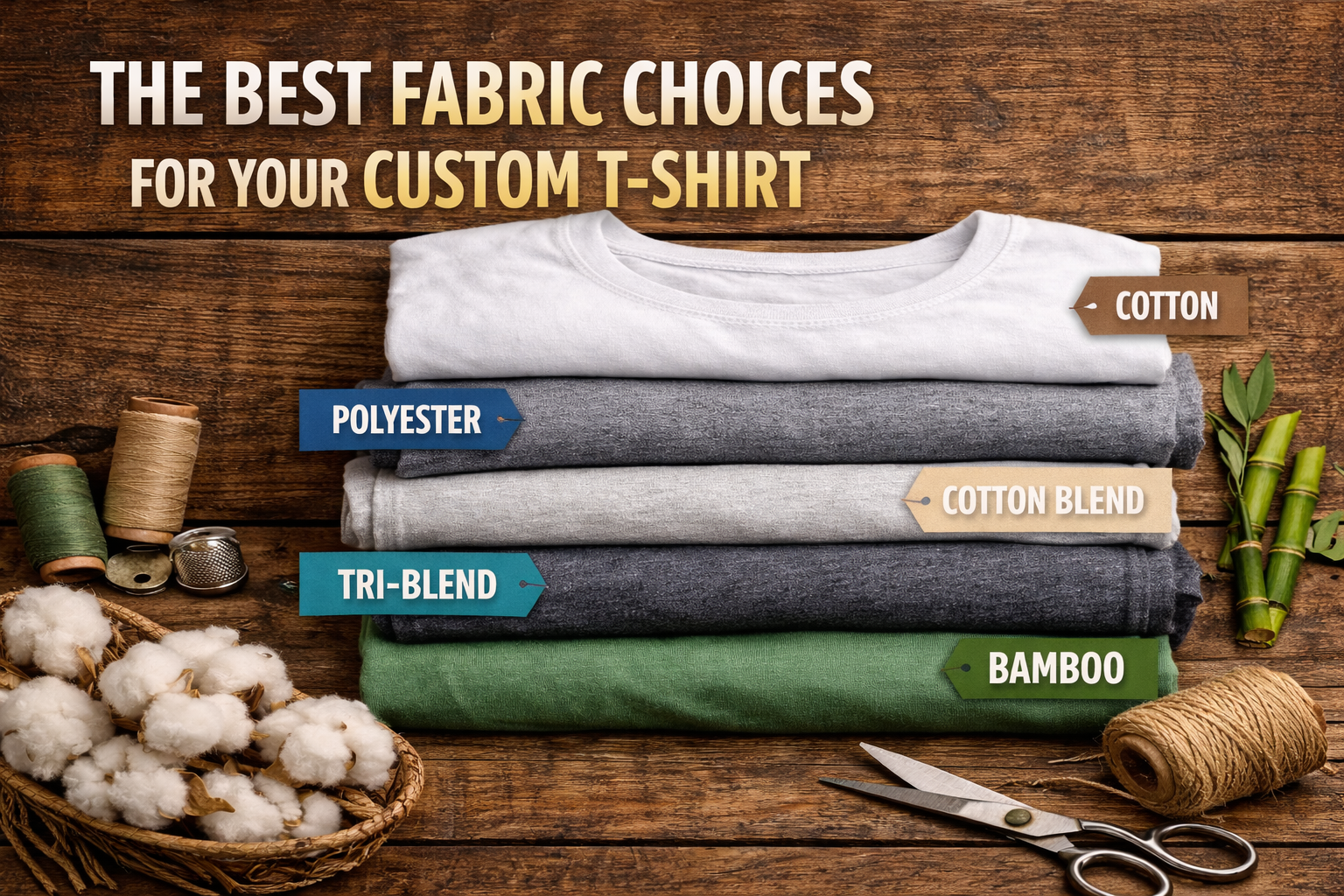
When it comes to custom t-shirts, the fabric you choose plays a crucial role in both comfort and style. Whether you're creating a personalized t-shirt for an event, a business, or simply for everyday wear, selecting the right fabric is key to ensuring your t-shirt looks great, feels comfortable, and lasts a long time. In this blog, we'll break down the best fabric options for custom t-shirts, highlighting their features, benefits, and why they make great choices for your designs.
1. Cotton: The Classic Favorite
Why Choose Cotton?
Cotton is by far the most popular fabric choice for t-shirts, and for good reason. It’s soft, breathable, and feels comfortable against the skin, making it ideal for all-day wear. Whether you're designing for a summer event or just want a versatile, everyday t-shirt, cotton is a classic choice.
Pros:
-
Breathable: Cotton allows air to circulate, making it perfect for warmer weather.
-
Soft and Comfortable: Known for its softness, cotton is gentle on the skin, even for those with sensitive skin.
-
Hypoallergenic: Cotton is naturally hypoallergenic, making it a safe choice for those with allergies.
-
Durable: High-quality cotton t-shirts last longer, even after multiple washes.
Cons:
-
Wrinkles Easily: Cotton fabric can wrinkle quickly, so it may require ironing.
-
Shrinks: Cotton t-shirts may shrink slightly after washing, especially if not pre-shrunk.
Best for: Casual wear, gifts, events, and those who want a soft, breathable t-shirt.
2. Polyester: The Durable, Moisture-Wicking Fabric
Why Choose Polyester?
Polyester is a synthetic fabric that has gained popularity due to its durability, moisture-wicking properties, and ability to hold its shape. If you're looking for a t-shirt that can handle sweat or one that retains its color and fit over time, polyester is an excellent option.
Pros:
-
Moisture-Wicking: Polyester draws moisture away from the body, keeping you cool and dry.
-
Durable: Polyester is highly resistant to shrinking, stretching, and wrinkles, making it a low-maintenance fabric.
-
Color Retention: Polyester holds dye well, ensuring vibrant colors that last longer.
-
Quick-Drying: It dries faster than cotton, making it ideal for activewear and sports events.
Cons:
-
Less Breathable: Polyester doesn’t breathe as well as cotton, which might be uncomfortable in extremely hot conditions.
-
Less Soft: It can feel less soft on the skin, especially when compared to natural fabrics like cotton.
Best for: Sportswear, activewear, events where sweat-wicking properties are essential, and anyone looking for a low-maintenance t-shirt.
3. Cotton-Polyester Blend: The Best of Both Worlds
Why Choose Cotton-Polyester Blend?
A cotton-polyester blend combines the natural softness of cotton with the durability and performance of polyester. This blend is ideal for those who want a t-shirt that’s comfortable yet resistant to wrinkles, shrinking, and fading.
Pros:
-
Durable and Low Maintenance: Blended fabrics are more durable than cotton alone and require less care.
-
Softness and Comfort: While not as soft as pure cotton, a blend still provides a comfortable, soft feel.
-
Wrinkle-Resistant: The polyester in the blend helps to reduce wrinkling and retains the shirt’s shape.
-
Versatile: It works well for casual wear, corporate events, and promotional merchandise.
Cons:
-
Less Breathable: While breathable, it doesn’t have the same airflow properties as 100% cotton.
-
Synthetic Feel: Some people may find the feel of blended fabric less natural than pure cotton.
Best for: Everyday wear, corporate uniforms, promotional shirts, and anyone who wants a mix of comfort and durability.
4. Tri-Blend: Soft, Lightweight, and Stylish
Why Choose Tri-Blend?
Tri-blend fabric is a combination of cotton, polyester, and rayon. It’s known for its lightweight, soft feel and flattering fit. If you're looking for a modern, stylish t-shirt with a unique texture, tri-blend is an excellent choice.
Pros:
-
Super Soft: The rayon adds extra softness, making tri-blend fabric one of the softest choices.
-
Lightweight: Perfect for warm weather, tri-blend fabric is light and breathable.
-
Stretchy: The blend of materials gives the fabric some stretch, making it more comfortable and flexible.
-
Vintage Look: Tri-blend fabric often has a heathered appearance, giving it a cool, vintage feel.
Cons:
-
Can Be Expensive: Tri-blend t-shirts are generally more expensive than cotton or cotton-blend shirts.
-
Less Durable: The rayon content can make tri-blend t-shirts less durable than cotton or polyester.
Best for: Trendy, fashion-forward designs, vintage-inspired looks, and anyone who values softness and comfort over durability.
5. Bamboo Fabric: The Eco-Friendly Choice
Why Choose Bamboo Fabric?
Bamboo fabric is an eco-friendly alternative to traditional fabrics. It’s made from bamboo pulp, which is processed into a soft, breathable fabric. Bamboo t-shirts are great for people who want a sustainable, comfortable option without compromising on style.
Pros:
-
Eco-Friendly: Bamboo is a sustainable, biodegradable material, making it an environmentally conscious choice.
-
Soft and Smooth: Bamboo fabric is incredibly soft and feels luxurious against the skin.
-
Moisture-Wicking: Similar to polyester, bamboo fabric wicks moisture away from the body, keeping you dry.
-
Antibacterial: Bamboo naturally has antibacterial properties, making it a great choice for activewear.
Cons:
-
Expensive: Bamboo fabric can be more expensive than traditional materials like cotton.
-
Requires Special Care: It can be more delicate and may need to be washed with care.
Best for: Eco-conscious consumers, activewear, and anyone looking for a sustainable, comfortable fabric.